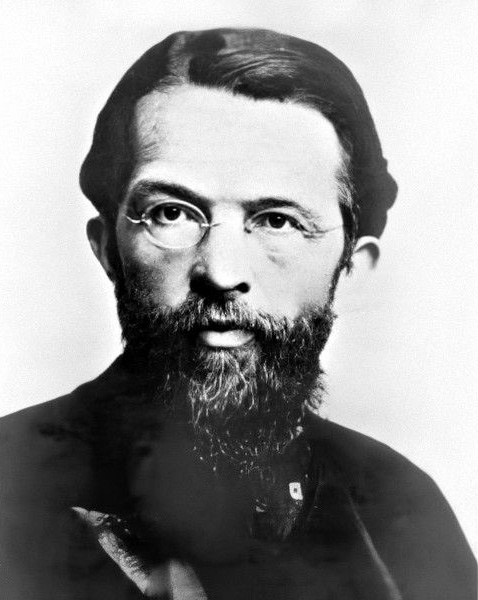
Founder of Austrian Economics
Carl Menger was born on February 23, 1840, in Neu-Sandez, Galicia (then part of the Austrian Empire, now Nowy Sącz, Poland). He laid the foundation of the Austrian School of Economics with his seminal work, Principles of Economics (1871). Initially studying law and working as a journalist, Menger’s analysis of market price fluctuations led him to challenge the classical labor theory of value, revolutionizing economic thought by introducing marginal utility and subjective value theory.
Menger’s most significant contribution was his development of marginal utility theory, independently of William Stanley Jevons and Léon Walras. He argued that value is subjective, determined by individual preferences rather than the labor required to produce a good. This insight resolved the “diamond-water paradox”, demonstrating that prices are set by the marginal usefulness of goods to individuals rather than by production costs. His work marked a turning point in economics, shifting the focus toward marginal analysis and consumer choice.
Menger also established methodological individualism, asserting that economic phenomena should be understood through the actions of individuals rather than broad historical or statistical trends. This led to the Methodenstreit (Methodology Dispute) with the German Historical School, which emphasized empirical data over theoretical analysis. In response, Menger wrote Investigations into the Method of the Social Sciences (1883), defending the use of logical deduction in economics.
In addition to value theory, Menger made key contributions to monetary economics. In On the Origins of Money (1892), he explained how money naturally evolves from barter systems through voluntary exchanges, rather than being created by government decree. His insights influenced later Austrian economists, particularly Eugen Böhm-Bawerk, Friedrich von Wieser, and Ludwig von Mises, shaping discussions on price formation, capital theory, and economic methodology.
Menger spent much of his later career refining his theories and mentoring students, including Crown Prince Rudolf of Austria. He passed away on February 26, 1921, in Vienna, Austria, leaving behind a legacy that continues to define Austrian economics. His Principles of Economics remains one of the most influential texts in economic history, establishing marginal utility, subjective value, and individual decision-making as core principles of the Austrian tradition.
 The Economic Vanguard