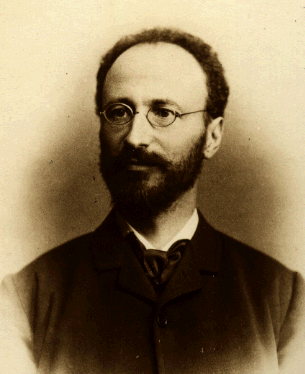
Timer of Austrian Economics
Eugen Böhm-Bawerk was born on February 12, 1851, in Vienna, Austria. A prominent Austrian economist, he is best known for his contributions to capital and interest theory, which built upon the foundations laid by Carl Menger, the founder of the Austrian School of Economics. Böhm-Bawerk studied law and economics at the University of Vienna, where he was heavily influenced by Menger’s teachings.
Böhm-Bawerk’s most significant contributions revolve around his theories of capital, interest, and time preference. In his seminal work, Capital and Interest (1884), he introduced the concept of time preference, asserting that individuals value present goods more highly than future goods. This principle explains why individuals prefer to consume now rather than later, leading to a natural interest rate. He argued that interest is the price of time, reflecting the opportunity cost of forgoing present consumption for future gain.
His capital theory emphasized the role of roundabout production processes, explaining how longer production processes can lead to more efficient and productive outputs. Böhm-Bawerk distinguished between basic capital goods and higher-order goods, illustrating how investments in capital are necessary for economic progress and increased productivity. This perspective provided a robust framework for understanding how capital accumulation drives economic growth and development.
In addition to his theoretical work, Böhm-Bawerk engaged in the Methodenstreit, defending the Austrian approach against the German Historical School. He championed the idea that economic laws could be derived from individual actions rather than purely empirical observations. His critiques of Marxian economics were particularly noteworthy, as he challenged the labor theory of value and demonstrated the logical inconsistencies within Marx’s framework.
Böhm-Bawerk held various academic positions throughout his career, including serving as the Minister of Finance in Austria-Hungary. He continued to refine and expand his theories until his death on August 4, 1914. His legacy endures in the field of economics, particularly through his influence on subsequent Austrian economists like Ludwig von Mises and Friedrich Hayek. His work remains foundational for discussions on capital theory, interest, and the nature of production, making him a key figure in the Austrian School of Economics.
 The Economic Vanguard