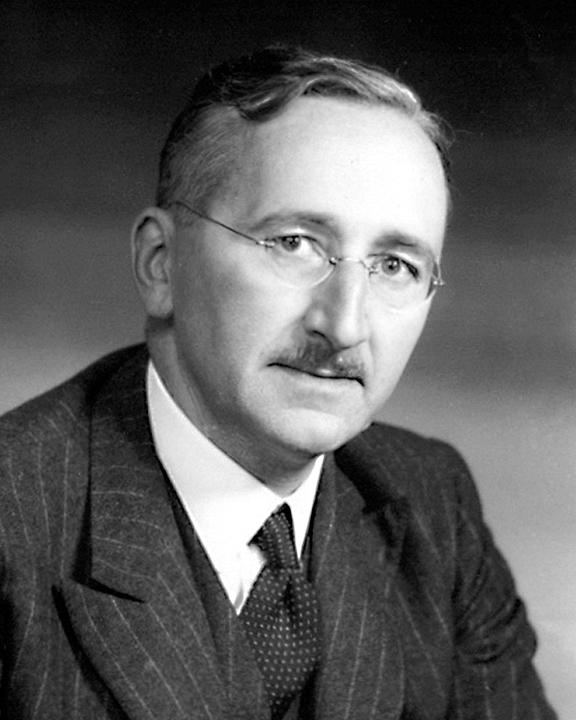
Champion of Austrian Economics
Friedrich Hayek was born on May 8, 1899, in Vienna, Austria, and is renowned as one of the leading economists and political philosophers of the 20th century. A prominent figure in the Austrian School of Economics, Hayek’s intellectual journey began with his studies in law and economics at the University of Vienna, where he was influenced by the ideas of Carl Menger and Ludwig von Mises. His work profoundly shaped modern economic thought and political philosophy, particularly in the areas of free markets, spontaneous order, and the critique of socialism.
Hayek’s most significant contributions include his development of the concept of spontaneous order, which posits that complex social phenomena can arise from the voluntary actions of individuals rather than from central planning. In his seminal work, The Road to Serfdom (1944), Hayek warned of the dangers of government intervention in the economy, arguing that such actions inevitably lead to totalitarianism. He emphasized the importance of individual liberty and the need for a competitive market system, which he believed allowed for the efficient allocation of resources and the promotion of innovation.
Another major contribution of Hayek’s is his work on business cycles and monetary theory. In Prices and Production (1931), he expanded upon Mises’s ideas regarding the impact of credit expansion on economic cycles, arguing that artificial manipulation of interest rates distorts price signals and leads to unsustainable booms followed by inevitable busts. This insight became a cornerstone of the Austrian business cycle theory, which explains how government intervention in monetary policy can lead to economic instability.
Hayek also made significant contributions to the philosophy of social sciences, particularly in his book The Use of Knowledge in Society (1945). He argued that knowledge is decentralized and dispersed among individuals, making it impossible for any central authority to effectively allocate resources or make informed decisions on behalf of society. This perspective highlighted the importance of the price mechanism as a tool for coordinating individual knowledge and preferences in a market economy.
Throughout his career, Hayek received numerous accolades for his work, including the Nobel Prize in Economic Sciences in 1974, which he shared with Gunnar Myrdal. His later years were spent in the United States, where he became a prominent figure in the libertarian movement, advocating for free markets, limited government, and individual liberty through organizations such as the Mont Pelerin Society, which he co-founded in 1947.
Friedrich Hayek passed away on March 23, 1992, in Freiburg, Germany. His legacy endures as a champion of classical liberalism and a staunch defender of free-market principles. His writings continue to inspire economists, policymakers, and advocates of individual freedom, solidifying his place as a key figure in the Austrian School of Economics and the broader field of social sciences.
 The Economic Vanguard