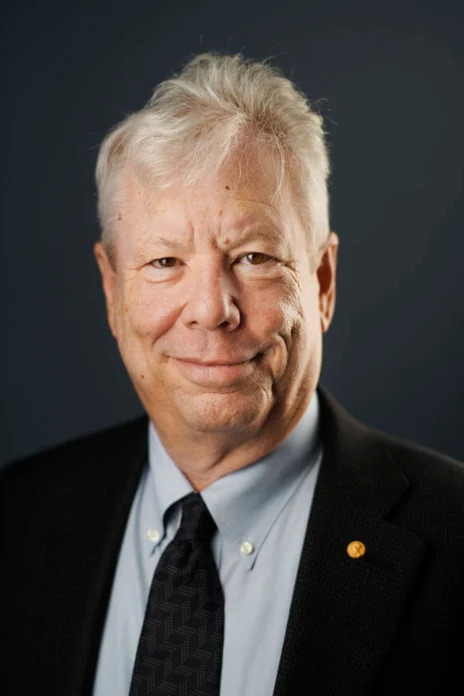
Popularizer of Behavioural Economics
Richard H. Thaler (born September 12, 1945, in East Orange, New Jersey, USA) is one of the most influential economists in the field of behavioral economics. Known for his groundbreaking work in integrating psychology and economics, Thaler has helped to reshape the understanding of human behavior in economic decision-making. He is particularly recognized for advancing the idea that individuals often act irrationally in ways that deviate from traditional economic theory, especially when it comes to decision-making under uncertainty and financial planning.
Thaler’s key ideas center on bounded rationality, mental accounting, nudging, and the endowment effect. Bounded rationality refers to the notion that people are not always perfectly rational decision-makers, as assumed in classical economics, but instead are limited by cognitive biases. His concept of mental accounting refers to the way individuals separate money into different “accounts” (e.g., vacation savings, emergency fund) and make decisions based on these artificial categories rather than considering all of their resources in a holistic manner. The endowment effect describes the phenomenon in which people assign more value to things merely because they own them, which contradicts the standard economic assumption that value is determined by utility.
Thaler is also well known for co-authoring the influential book, “Nudge: Improving Decisions About Health, Wealth, and Happiness” (2008) with Cass Sunstein. In this work, Thaler introduced the idea of “nudging” – subtle policy shifts that guide people to make better choices without restricting their freedom. His work on nudging has had a profound impact on public policy, especially in areas like retirement savings and health care.
Some of Thaler’s other major works include “Misbehaving: The Making of Behavioral Economics” (2015), in which he chronicles the development of the behavioral economics field, and “The Winner’s Curse: Paradoxes and Anomalies of Economic Life” (1992), which explores how market participants often make decisions based on incomplete or flawed information.
Thaler’s contributions to economics have earned him widespread recognition, including the Nobel Prize in Economic Sciences in 2017 for his contributions to understanding human behavior in economic decision-making. He was awarded this honor for showing how human flaws and biases affect the economy, particularly in areas like retirement savings, consumer behavior, and the design of financial markets.
Thaler studied at Case Western Reserve University and earned his Ph.D. in economics from University of Rochester in 1974. As of now, Richard Thaler is a professor of Behavioral Science and Economics at the University of Chicago Booth School of Business.
 The Economic Vanguard