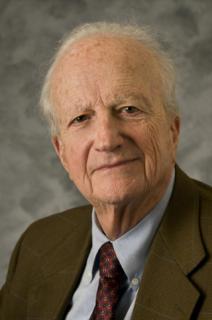
Punisher of Chicago Economics
Gary S. Becker was born on December 2, 1930, in Pottsville, Pennsylvania. A pioneering figure in the Chicago School of Economics, Becker extended economic analysis beyond traditional markets, applying it to areas such as human capital, discrimination, crime, and family economics. His groundbreaking work helped establish the field of microeconomic analysis of individual behavior, demonstrating that economic principles apply to everyday human decisions, not just financial markets.
Becker studied at Princeton University before earning his Ph.D. at the University of Chicago, where he was heavily influenced by Milton Friedman. He later joined the faculty at Chicago, where he spent much of his career developing new ways to analyze social and economic issues through an economic lens. His work revolutionized the way economists view individual choices, particularly in non-market contexts.
One of his most influential contributions was the development of human capital theory, which he outlined in his book Human Capital (1964). Becker argued that investments in education, training, and health improve an individual’s productivity, much like investments in physical capital enhance business output. This concept reshaped labor economics and public policy, influencing debates on education, workforce development, and income inequality.
Becker also made significant contributions to the study of discrimination, publishing The Economics of Discrimination (1957), where he used economic theory to show that discriminatory practices in labor markets lead to inefficiencies and are eventually punished by competitive forces. His work provided a framework for understanding how race, gender, and social factors impact economic decision-making.
Another area of his research was crime and punishment, where he applied cost-benefit analysis to criminal behavior in Crime and Punishment: An Economic Approach (1968). Becker argued that criminals are rational actors who weigh the expected benefits of crime against the probability and severity of punishment. This work laid the foundation for modern economic approaches to law enforcement and criminal justice policy.
His later work extended to family economics, particularly in A Treatise on the Family (1981), where he analyzed marriage, divorce, fertility, and household decision-making through an economic lens. He showed that families function as economic units that respond to incentives and constraints, influencing policies on welfare, childcare, and family planning.
For his wide-ranging contributions, Becker was awarded the Nobel Prize in Economic Sciences in 1992, recognizing his role in expanding the scope of economic analysis. His innovative work continues to influence economics, sociology, and public policy. Becker passed away on May 3, 2014, leaving behind a legacy of applying economic reasoning to social issues, fundamentally reshaping the way economists think about human behavior.
 The Economic Vanguard