Calculator of Chicago Economics
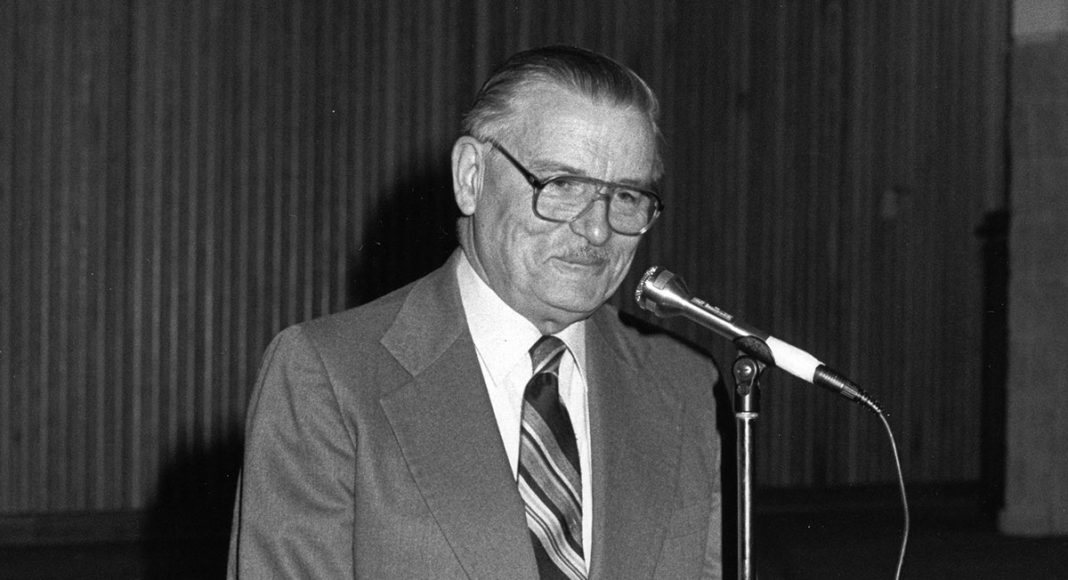
James M. Buchanan was born on October 3, 1919, in Murfreesboro, Tennessee. A towering figure in the field of public choice theory, Buchanan is best known for his work on constitutional economics and the application of economic analysis to political decision-making. He was a leading figure in the Chicago School of Economics and is credited with founding the field of public choice theory, which explores how individuals within political systems behave similarly to individuals in markets, pursuing their own self-interest rather than the public good. His contributions to understanding voting behavior, government intervention, and the role of constitutional rules in shaping economic outcomes have had a profound influence on both economics and political science.
Buchanan completed his undergraduate studies at Middle Tennessee State University and went on to earn his Ph.D. at the University of Chicago, where he was influenced by economists such as Frank Knight and Jacob Viner. His work at the University of Chicago shaped his intellectual development, and he later became a professor at Virginia Polytechnic Institute and George Mason University, where he continued to develop and refine his ideas.
His most influential work, The Calculus of Consent (1962), co-authored with Gordon Tullock, introduced the concept of constitutional choice and analyzed the rules of decision-making in democratic societies. Buchanan and Tullock argued that the choices individuals make in political markets are similar to those made in economic markets, and that the institutional structure of governance, rather than the individuals within it, determines the efficiency and fairness of political outcomes. This work laid the groundwork for the study of how constitutional rules can influence the incentives of political actors.
Buchanan was a passionate advocate for limited government and market-based solutions to social problems. He argued that government intervention often leads to inefficient outcomes, and he stressed the importance of creating constitutional rules that limit the scope of government and protect individual freedoms. His work on voting theory, fiscal policy, and the role of government has had a lasting impact on how economists and political scientists think about public policy and the design of political institutions.
In 1986, Buchanan was awarded the Nobel Prize in Economic Sciences for his development of public choice theory, which revolutionized the study of political economy. He passed away on January 9, 2013, but his legacy continues to shape the field of constitutional economics and the study of political behavior, influencing both libertarian thought and modern economic policy.
 The Economic Vanguard