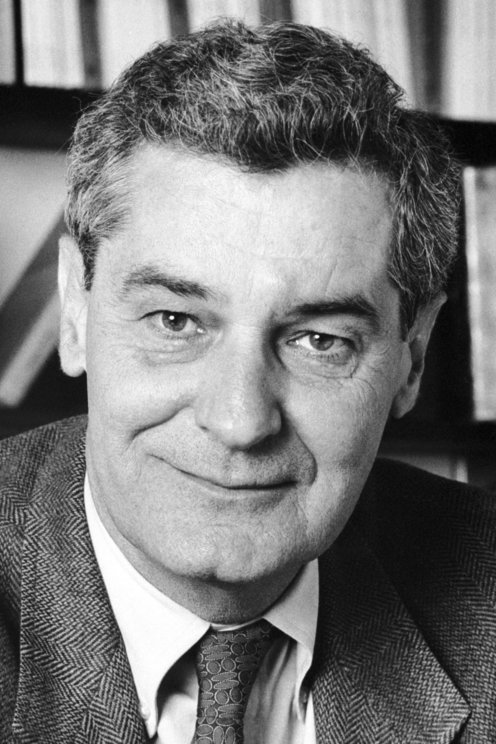
Cyclist of Chicago Economics
Robert E. Lucas Jr. was born on September 15, 1937, in Yakima, Washington. A leading figure in the Chicago School of Economics, Lucas is best known for developing the rational expectations hypothesis, which transformed macroeconomic theory and policy. His work challenged Keynesian economics, laying the foundation for modern neoclassical macroeconomics and significantly influencing monetary policy.
Lucas earned his undergraduate and Ph.D. degrees from the University of Chicago, where he was influenced by Milton Friedman and Arnold Harberger. He later became a professor at Chicago, where he spent most of his career refining monetary theory, business cycle analysis, and economic growth models. His ideas reshaped central banking and fiscal policy by arguing that individuals form expectations about future economic policy and adjust their behavior accordingly, making systematic government intervention less effective than previously believed.
His most influential contribution was the Lucas Critique, introduced in his 1976 paper Econometric Policy Evaluation: A Critique. He argued that traditional Keynesian models failed because they assumed fixed behavioral relationships, ignoring that individuals and businesses adjust their expectations based on policy changes. This insight led to the decline of large-scale Keynesian economic models and the rise of micro-founded macroeconomics.
Lucas also contributed significantly to business cycle theory. In his Expectations and the Neutrality of Money (1972), he developed a new classical macroeconomic model, showing that monetary policy could only influence real economic variables if it surprised rational agents. This work reinforced the idea that anticipated monetary policy has no real effects, pushing for rules-based approaches to economic management rather than discretionary intervention.
Beyond monetary theory, Lucas made major advancements in economic growth models, particularly in On the Mechanics of Economic Development (1988). He introduced the Lucas model of endogenous growth, emphasizing the role of human capital accumulation in long-term economic growth. His work inspired further research into how education, innovation, and knowledge drive prosperity.
For his profound impact on economics, Lucas was awarded the Nobel Prize in Economic Sciences in 1995, recognizing his role in reshaping macroeconomic thought. His work remains a cornerstone of modern economics, influencing monetary policy, fiscal policy, and economic modeling. Lucas passed away on May 15, 2023, leaving behind a legacy that fundamentally altered the way economists understand expectations, policy effectiveness, and economic growth.
 The Economic Vanguard