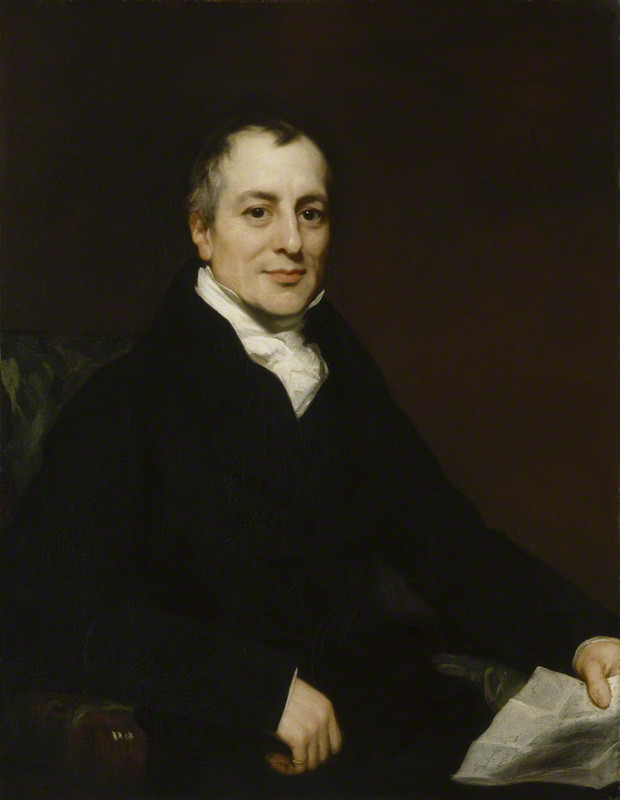
Pioneer of Classical Economics
David Ricardo was born on April 18, 1772, in London, England, into a Jewish family of Portuguese descent. He became one of the most influential economists of the 19th century, largely through his keen observations and theoretical advancements in economic thought. After entering the family business in the stock market, Ricardo quickly amassed wealth and retired early to dedicate himself to economics. His first major work, The High Price of Bullion, a Proof of the Depopulation of the Country (1810), criticized the Bank of England’s monetary policy, arguing that inflation was the result of excessive money supply. This work established him as a formidable thinker in the field.
Ricardo’s most significant contribution to economics is encapsulated in his seminal work, Principles of Political Economy and Taxation (1817). In this book, he introduced the theory of comparative advantage, which posited that countries should specialize in producing goods for which they have a relative efficiency, thus promoting international trade. This principle remains a cornerstone of modern trade theory. Ricardo also developed the labor theory of value, asserting that the value of a good is determined by the labor required for its production, laying the groundwork for subsequent economic thought.
Additionally, he introduced the concept of Ricardian rent, which explained how landowners could earn economic rent due to differences in land quality and location, emphasizing the importance of land in production. Ricardo’s insights into diminishing returns and the implications for agriculture were groundbreaking, arguing that as more labor and capital are applied to land, the additional output gained will eventually decline. His rigorous analytical approach to economic issues and his advocacy for free trade policies significantly influenced economic policy in the 19th century.
Ricardo’s legacy extends beyond his lifetime; he profoundly impacted later economists, including Karl Marx and Alfred Marshall. He died on September 11, 1823, in Gatcombe Park, Gloucestershire, leaving behind a body of work that solidified his place as one of the key figures in Classical Economics. His ideas continue to shape economic thought and policy to this day.
 The Economic Vanguard