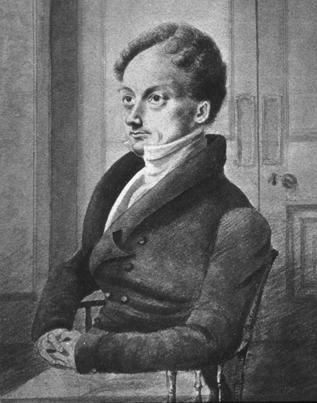
Philosopher of Classical Economics
James Mill was born on April 6, 1773, in Angus, Scotland. A brilliant student, he studied at the University of Edinburgh, where he developed a deep interest in philosophy, history, and political economy. Moving to London, he established himself as a journalist and intellectual, becoming a close associate of Jeremy Bentham, with whom he helped shape the utilitarian movement. His writings on government, education, and economics made him a key figure in the development of Classical Economics, influencing both his contemporaries and his son, John Stuart Mill, who would later expand upon his ideas.
Mill’s most significant economic contribution came in his 1821 work, Elements of Political Economy, where he sought to systematize and popularize the theories of David Ricardo and Adam Smith. He was a staunch proponent of free markets, minimal government intervention, and the importance of capital accumulation. He reinforced Ricardian rent theory, which explained how landlords benefit from rising land values while industrialists and workers face diminishing returns. He also supported the wage-fund doctrine, which argued that wages are determined by a fixed pool of capital set aside by employers, a theory later criticized for its rigid assumptions about labor markets.
Politically, Mill was an ardent defender of representative government and economic liberalism, believing that an educated ruling class should guide national policy. His 1819 work, Essay on Government, laid out his vision of a meritocratic political system where power was concentrated among the most capable, reflecting his distrust of mass democracy. His utilitarian principles extended into economics, advocating for policies that maximized overall societal well-being, often at the cost of greater political participation for the lower classes.
Beyond economics, Mill played a crucial role in shaping British governance in India. As a high-ranking official in the East India Company, he authored The History of British India (1817), a highly influential but controversial work that justified British rule on the grounds of bringing “civilization” to the subcontinent. His bureaucratic reforms emphasized efficiency and rational administration, though they also reflected his paternalistic view of colonial subjects.
James Mill’s influence on Classical Economics and political philosophy endured long after his death on June 23, 1836. His work helped solidify Ricardian economic principles, and his emphasis on utilitarianism, free markets, and limited government intervention shaped British economic thought for decades. While some of his ideas were later revised by his son and other economists, his legacy as a rigorous economic thinker and utilitarian reformer remains an essential part of classical liberal thought.
 The Economic Vanguard