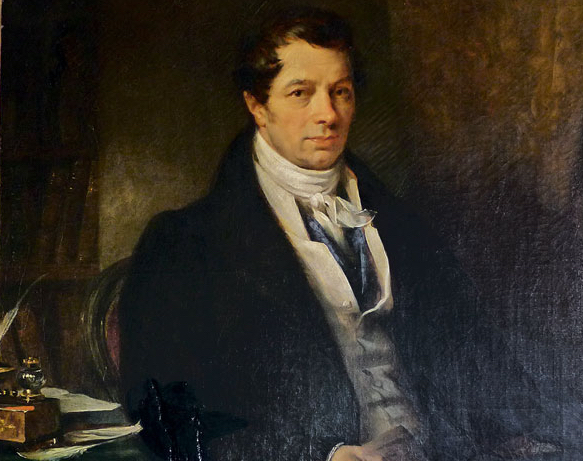
Advocate of Classical Economics
Jean-Baptiste Say was born on January 5, 1767, in Lyon, France. Initially trained for a career in business, he became deeply influenced by the ideas of Adam Smith, whose work shaped his understanding of economics. Say worked in commerce and journalism before fully committing to economic theory, eventually becoming one of the most prominent defenders of laissez-faire economics in France. His background in business gave him practical insights into economic mechanisms, which he later articulated in his writings.
Say’s most influential work, Traité d’économie politique (1803), laid the foundation for his economic theories and became a cornerstone of Classical Economics. The book championed free markets, entrepreneurship, and limited government intervention, reinforcing Smithian ideas while offering his own contributions. His most famous principle, Say’s Law of Markets, stated that “supply creates its own demand,” meaning that production inherently generates the income necessary to purchase goods. This idea emphasized the role of production over consumption in driving economic growth and became a central debate point in later economic thought, particularly against Keynesianism.
Unlike many classical economists who focused on labor or land, Say highlighted the role of entrepreneurs as the driving force behind economic activity. He argued that entrepreneurs coordinate resources, innovate, and take risks, making them essential to wealth creation. This focus distinguished him from his contemporaries and influenced later economic schools, particularly Austrian and supply-side economics.
Say was also an advocate for free trade, arguing that removing restrictions on commerce would maximize national prosperity. He opposed government intervention in markets, believing that competition and voluntary exchange lead to the most efficient allocation of resources. Though Napoleon initially dismissed his ideas, Say’s influence grew over time, leading him to hold academic positions, including a professorship at the Collège de France.
Jean-Baptiste Say died on November 15, 1832, in Paris. His legacy endures through Say’s Law and his emphasis on the role of production and entrepreneurship in economic development. Though later challenged by Keynesian economists, his insights remain foundational in classical and supply-side economic thought.
 The Economic Vanguard