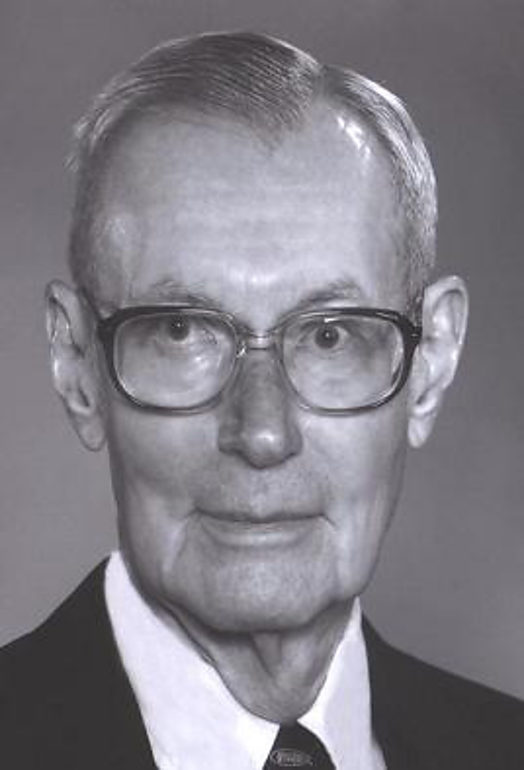
Historian of Free banking Economics
Leland Yeager (born 1925, United States) was a prominent economist known for his work on monetary theory, free banking, and economic policy. A leading figure in the Austrian school of economics, Yeager was an advocate of the free market in banking and the elimination of central bank interference in the monetary system.
Yeager is particularly recognized for his contributions to the understanding of the role of money in the economy and the relationship between monetary policy and economic stability. He critiqued the central banking system and supported the idea of competitive banking in which private banks issue their own currency. Yeager’s work extended to broader discussions of economic policy and the role of government intervention in markets, where he argued that free-market solutions were preferable to central planning.
Among his major works are The Free Banking Idea (1976), where he discussed the potential benefits of free banking systems, and Money: A Course in Mathematical Economics (1976), which laid out an analytical framework for understanding monetary systems. Yeager also wrote extensively on the effects of inflation and the inefficiencies of government control over money supply.
Yeager was a professor of economics at the University of Virginia, and his work remains influential in both Austrian economics and free-market monetary policy discussions. His scholarship on monetary theory, free banking, and government regulation has made him a key figure in advocating for the role of markets in monetary systems. He passed away in 2018, leaving behind a legacy of contributions to monetary theory and the economics of free banking.
 The Economic Vanguard