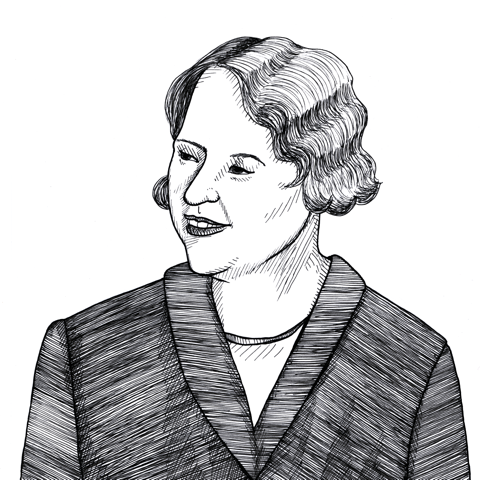
Female of Free Banking Economics
Vera C. Smith (born 1905, United Kingdom) was a British economist known for her pioneering work on free banking and monetary theory. Smith is particularly recognized for her historical and theoretical analysis of monetary systems, especially her critique of central banking and her advocacy for private banking and the free market in money.
Smith’s most influential work, The Rationale of Central Banking and the Free Banking Alternative (1936), is considered a seminal contribution to the free banking literature. In this book, she argued that central banking was an inefficient and potentially dangerous system, and that a system of free banking, where private banks issue money, could offer a more stable and efficient monetary framework. Her work laid the groundwork for later Austrian economists and advocates of the free banking school, such as Friedrich Hayek and Milton Friedman, who would build upon her ideas.
In her writings, Smith emphasized that competitive banking could foster a more effective and stable monetary system, free from the inflationary pressures and market distortions caused by central bank interventions. She also explored the historical evolution of banking systems, showing how the shift from private to public control over money had negative consequences for both the economy and the financial system.
Smith’s contributions were largely underappreciated during her lifetime, but her work has gained recognition in later years as scholars have revisited the principles of free banking. Although she was not as well-known as some of her contemporaries, her advocacy for the privatization of money and her critiques of central banking continue to influence debates within the Austrian school and the monetary reform movement. She passed away in 1993, leaving behind a lasting legacy in the field of free banking economics.
 The Economic Vanguard