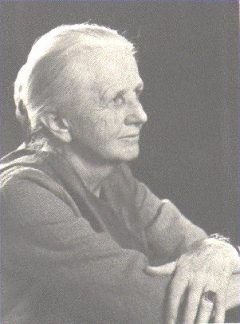
Female of Keynesian Economics
Joan Violet Robinson was born on October 31, 1903, in Camberley, Surrey, England. She studied economics at Girton College, Cambridge, and later became one of the most influential members of the Cambridge School of Economics. Robinson was a close associate of John Maynard Keynes and played a crucial role in developing and expanding Keynesian economic thought.
One of Robinson’s earliest and most significant contributions was her work on imperfect competition, presented in her 1933 book, The Economics of Imperfect Competition. In this work, she challenged the classical assumption of perfect competition and introduced concepts such as monopsony (a market with a single buyer), price discrimination, and product differentiation. This analysis helped lay the groundwork for modern microeconomics and industrial organization.
Robinson was also instrumental in the Keynesian revolution, helping to interpret and expand upon Keynes’s General Theory of Employment, Interest, and Money (1936). She developed key insights into effective demand, employment theory, and capital accumulation, which became central to post-Keynesian economics.
Her contributions to capital theory were particularly influential. In the Cambridge capital controversy, Robinson challenged the neoclassical view of capital and questioned the validity of aggregate production functions. Her criticisms, alongside those of Piero Sraffa, sparked a major debate between Cambridge (UK) economists and their American counterparts, particularly Paul Samuelson and Robert Solow.
Robinson was also a vocal advocate for economic and social justice. In her later years, she became increasingly critical of mainstream economic theory, embracing post-Keynesianism and exploring alternative economic models, including those inspired by Marxist and developmental economics.
Despite being one of the most influential economists of the 20th century, Robinson was never awarded the Nobel Prize, a fact that many believe was due to her outspoken political views. She remained an active scholar until her death on August 5, 1983, in Cambridge, England. Her legacy continues to influence heterodox economic thought, particularly in the fields of imperfect competition, Keynesian economics, and development economics.
 The Economic Vanguard