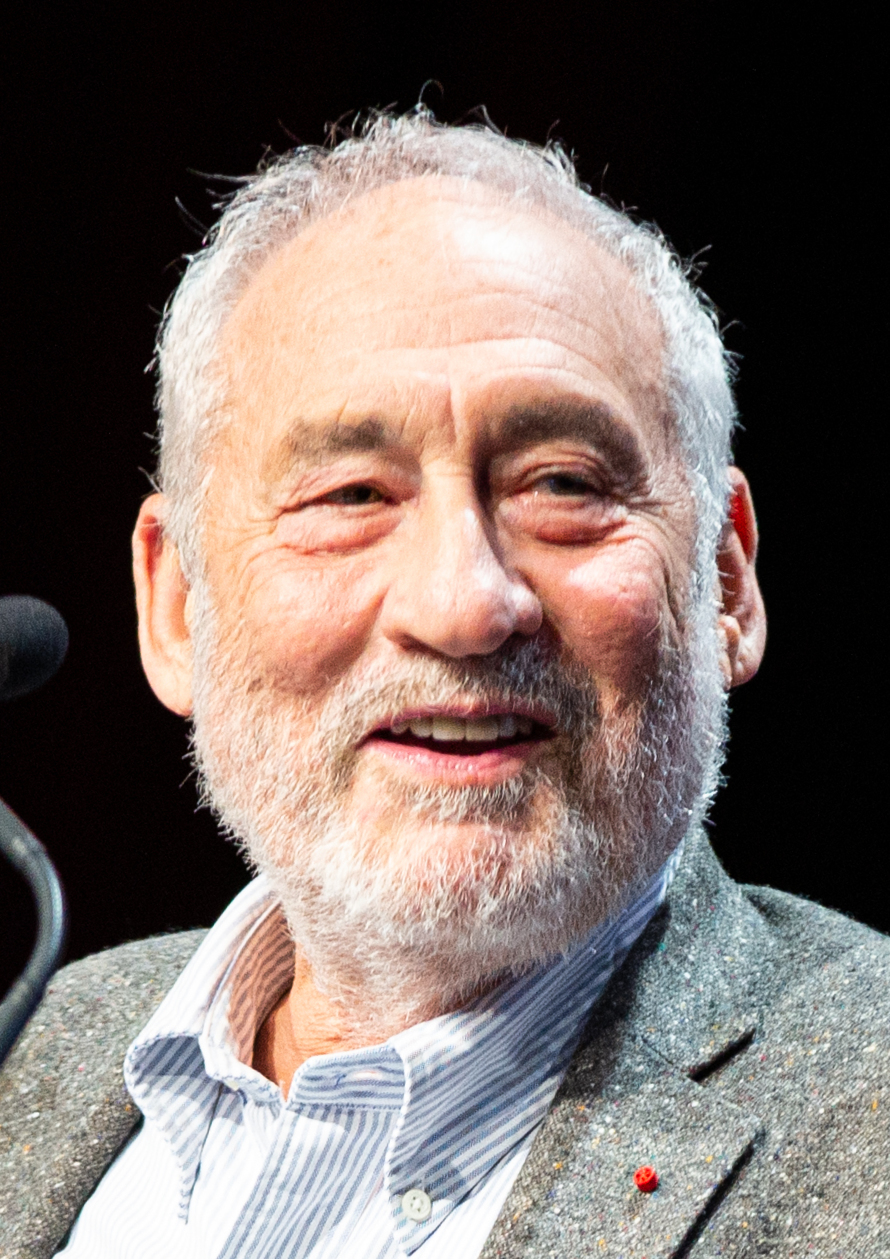
Signalist of Keynesian Economics
Joseph Eugene Stiglitz was born on February 9, 1943, in Gary, Indiana, USA. He studied at Amherst College before earning his PhD in economics from the Massachusetts Institute of Technology (MIT) in 1967. Throughout his career, Stiglitz became one of the most influential economists of his time, making groundbreaking contributions to information economics, market failures, and inequality, all within a broadly Keynesian framework.
Stiglitz’s most significant theoretical contributions lie in the field of information asymmetry, which challenges the classical assumption that markets operate efficiently with perfect information. His work demonstrated that when some market participants have more or better information than others, market failures occur, leading to inefficiencies such as adverse selection and moral hazard. These ideas were developed in collaboration with Michael Rothschild and Andrew Weiss, particularly in his seminal papers on screening and signaling in markets. His research provided the foundation for the economics of imperfect information, which has since become a central theme in modern economic analysis.
Beyond theory, Stiglitz has been an outspoken critic of laissez-faire economics, arguing that government intervention is often necessary to correct market inefficiencies. He has been particularly critical of policies promoted by the International Monetary Fund (IMF) and the World Bank, contending that their structural adjustment programs often exacerbate economic crises rather than resolve them. His book Globalization and Its Discontents (2002) brought these critiques to a wider audience and became a major work in political economy.
Stiglitz has also contributed extensively to development economics, inequality studies, and macroeconomic policy, advocating for progressive taxation, strong labor protections, and government policies that reduce income disparities. His Keynesian orientation is evident in his support for fiscal stimulus during recessions and his critiques of austerity measures. His later works, such as The Price of Inequality (2012) and People, Power, and Profits (2019), continue to argue that unregulated capitalism leads to wealth concentration and economic instability.
Throughout his career, Stiglitz has held numerous prestigious positions, including serving as Chief Economist of the World Bank (1997-2000) and as Chairman of the Council of Economic Advisers under President Bill Clinton. In 2001, he was awarded the Nobel Memorial Prize in Economic Sciences, alongside George Akerlof and Michael Spence, for their work on information asymmetry.
Currently, Stiglitz is a professor at Columbia University, where he continues to research and advocate for policies that promote inclusive economic growth. His influence extends beyond academia, as he remains an active public intellectual shaping economic discourse on inequality, globalization, and financial regulation.
 The Economic Vanguard