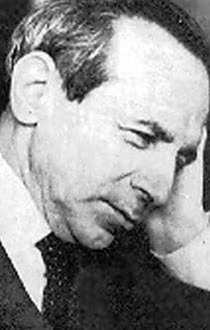
Polish of Keynesian Economics
Michał Kalecki was born on December 22, 1899, in Łódź, Poland. He studied at the University of Warsaw, where he developed a keen interest in economics. After graduating, he initially worked in various positions, including in the Ministry of Treasury in Poland, where he began to formulate his economic theories. Kalecki’s work emerged during a time of significant economic upheaval and laid the foundation for his contributions to macroeconomic theory.
Kalecki is best known for his development of the theory of effective demand, which parallels the ideas of John Maynard Keynes but predates them in many respects. His major work, “Theory of Economic Dynamics” (1939), introduced concepts such as the Kalecki Equation, which describes the relationship between income, investment, and consumption in the economy. He emphasized the role of profits in determining investment levels, arguing that the distribution of income affects overall demand.
In addition to his theoretical contributions, Kalecki’s work addressed the importance of business cycles and the role of government policy in stabilizing economies. He posited that economic fluctuations were driven by changes in investment and consumption, and he advocated for government intervention to manage these cycles effectively. His insights into the relationship between investment, employment, and economic activity remain influential in post-Keynesian economics.
Kalecki was also a strong critic of capitalism and the social injustices it perpetuated. His writings often reflected a concern for the working class and the need for policies that would promote full employment and equitable income distribution.
Throughout his career, Kalecki published numerous articles and papers, contributing to various journals and economic discussions. He spent time in several countries, including the United States and the United Kingdom, where he engaged with other prominent economists of his time.
Michał Kalecki passed away on April 18, 1970, in Warsaw, Poland. His contributions to economic theory, particularly his insights into effective demand and the dynamics of capitalism, have left a lasting legacy in the field of economics and continue to inform contemporary economic thought and policy.
 The Economic Vanguard