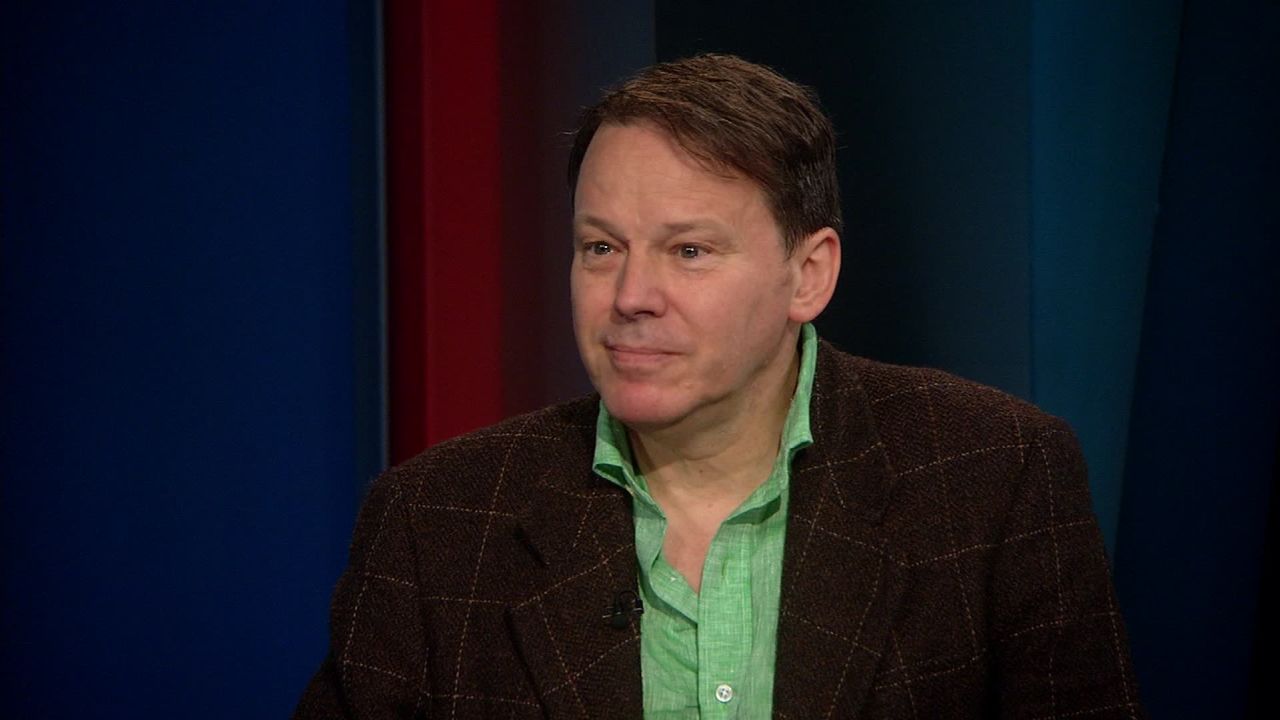
Anthropologist of Behaviourist Economics
David Graeber was born on February 12, 1961, in New York City, and was a prominent anthropologist, activist, and author whose work examined the intersections between economics, society, and power. Graeber was a central figure in the Occupy Wall Street movement and became widely known for his critiques of modern capitalism, debt, and bureaucracy. His ideas bridged anthropology and economics, offering unique perspectives on how economic systems and social structures interact. Graeber held a Ph.D. in anthropology from the University of Chicago and was a professor at the London School of Economics (LSE) at the time of his passing. He also held various academic positions and was active in both the academic and activist spheres.
Graeber’s most influential work is “Debt: The First 5,000 Years” (2011), a comprehensive historical and anthropological exploration of debt and its role in shaping human societies. In this work, Graeber challenges traditional economic narratives that view debt as a natural or inherently beneficial system. He traces the origins of debt back to ancient civilizations, suggesting that debt and credit systems were originally a form of social contract and that money was not always tied to precious metals or backed by a centralized authority. Graeber argues that debt has often been used as a tool of social control, and he examines how debt has been interwoven with systems of slavery, war, and colonialism throughout history.
The book also critiques contemporary capitalist economies, which, according to Graeber, use debt to create cycles of inequality and economic instability. He proposes an alternative model where debt is not viewed as a means of exploitation and proposes debt jubilees and other methods of debt forgiveness to restore balance to societies burdened by oppressive debt systems. This work is known for its provocative claim that modern capitalism is fundamentally a system that perpetuates debt rather than one that is inherently productive or just.
In addition to his work on debt, Graeber is also well-known for his book “Bullshit Jobs: A Theory” (2018), in which he critiques the rise of meaningless work in modern economies. Graeber argues that many people today are employed in jobs that offer no real value to society, but are merely part of the bureaucratic machinery that maintains an economic system that prioritizes profit over human well-being. He identifies a growing phenomenon where individuals are employed in roles that are socially pointless, and he posits that such work diminishes personal fulfillment and leads to a loss of purpose in people’s lives. Graeber suggests that unnecessary jobs are part of a larger system of control, where individuals are trapped in work that reinforces the power dynamics of modern capitalism.
Another significant aspect of Graeber’s work was his critique of bureaucracy and the way modern institutions, both public and private, operate. In his earlier work, “The Utopia of Rules: On Technology, Stupidity, and the Secret Joys of Bureaucracy” (2015), Graeber investigates the paradox of the increasing centrality of bureaucracy in contemporary life. Despite the promise of technological advances making work more efficient, bureaucratic systems have only expanded, leading to an era of red tape and inefficiency. He explores how bureaucratic structures, which originally emerged as a means of organizing complex societies, have come to stifle creativity and contribute to economic inequality.
Graeber’s writing is deeply rooted in a belief that economic systems must be examined not only from a theoretical perspective but also through a humanistic lens that considers the impact of these systems on people’s lives. His approach to economics was often critical of the mainstream academic and economic orthodoxies that prioritize abstract models over lived human experience. His work continues to resonate with those who challenge the assumptions of modern capitalist systems and search for alternatives that promote equality and human flourishing.
While Graeber was associated with anarchist and anti-capitalist political movements, he did not advocate for rigid political ideologies. Instead, he sought to deconstruct systems of power and control, advocating for a more just and humane social order. His work has made a lasting impact on fields like economic anthropology, political economy, and activist movements, where his ideas continue to provoke thought about the intersection of economics, power, and social organization.
David Graeber passed away on September 2, 2020, leaving behind a legacy of intellectual exploration and critique of modern society, economics, and political structures. His work continues to inspire those looking to challenge the status quo and reimagine a world where human dignity and freedom are at the center of social and economic arrangements.
 The Economic Vanguard