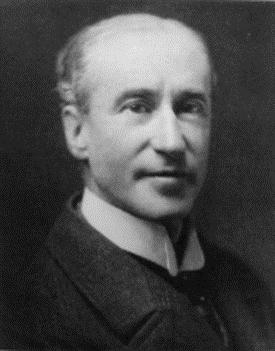
Land Enjoyer of Classical Economics
Henry George was born on September 2, 1839, in Philadelphia, Pennsylvania, and is best known as an influential American economist, social reformer, and advocate for the single tax movement. George’s ideas on land value taxation have had a profound impact on economic thought, particularly regarding the issue of land ownership and its relationship to social inequality. He was largely self-educated, having left formal schooling at an early age to work, and became widely known for his writings and activism, which sought to address the growing disparities between the rich and the poor in urban areas during the late 19th century.
George’s most famous work, “Progress and Poverty” (1879), was a groundbreaking treatise that sought to explain the root causes of poverty and economic inequality amidst economic growth. In this book, he proposed that the primary cause of poverty was the unearned increase in land values. According to George, landowners captured the value generated by the community’s collective growth, leaving those who did not own land at a disadvantage. His solution was the introduction of a single tax on land value, which would replace other forms of taxation, such as those on income, sales, or property. The land value tax would allow for the fair distribution of wealth by taxing land speculation and ensuring that the benefits of economic progress were shared more equitably.
In “Progress and Poverty”, George argued that land, unlike other forms of capital, does not have an inherent cost of production. As cities grew and economies developed, the value of land increased due to the efforts of the community and society at large. However, this increase in value was captured by landowners, leaving the majority of people who did not own land at a disadvantage. By taxing land values, George believed, wealth could be more equitably distributed without stifling economic growth. His proposals on land taxation were meant to eliminate poverty and curb the rise of industrial monopolies.
George’s ideas were revolutionary in their simplicity, yet they sparked a fierce intellectual and political debate. While his single tax theory was widely discussed and debated in the late 19th and early 20th centuries, it never gained widespread adoption. Nonetheless, George’s ideas inspired a number of political movements and social reformers, including John Dewey, Albert Einstein, and John Maynard Keynes, who recognized the value of his critique of land monopoly and its social implications.
In addition to “Progress and Poverty”, George also wrote several other important works, including “The Science of Political Economy” (1898), in which he expanded on his economic theory and discussed the principles of political economy in more depth. In this work, George argued for a reformist approach to government policy, advocating for the redistribution of wealth through land taxation as the primary means of achieving social justice. “Protection or Free Trade” (1886), another of his key works, was a critique of protectionist tariffs and a defense of free trade, which he saw as essential for economic prosperity and fairness.
Although George’s ideas were not fully realized during his lifetime, his work laid the foundation for later developments in geonomics and land value taxation, which continue to be advocated by some modern economists and activists. His writings were instrumental in challenging the conventional economic wisdom of his time, and his influence can still be seen today in contemporary discussions of taxation reform, income inequality, and the fair distribution of wealth.
Henry George’s advocacy for land value taxation was motivated by his belief in economic fairness and the need for a more just society. He sought to eliminate the artificial barriers that prevented ordinary people from benefiting fully from the wealth generated by their communities. His work continues to be cited by economists and political thinkers who are interested in alternative approaches to taxation and wealth redistribution.
George passed away on October 29, 1897, but his intellectual legacy lives on through the continued discussion of his ideas on land reform, taxation, and social justice.
 The Economic Vanguard