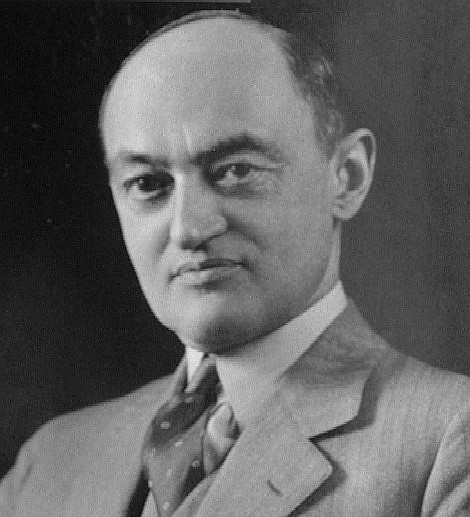
Black Piller of Austrian Economics
Joseph A. Schumpeter was born on February 8, 1883, in Triesch, Austria-Hungary (modern-day Czech Republic). He studied economics at the University of Vienna, where he was influenced by prominent economists such as Eugen von Böhm-Bawerk and Karl Menger. Schumpeter later went on to study law and political science, obtaining his doctoral degree in economics in 1906. Over his distinguished career, Schumpeter became known as a visionary economist, political scientist, and historian of economic thought. His works focus on economic development, the role of entrepreneurs, and the dynamics of capitalism.
Schumpeter is best known for his concept of “creative destruction”, a theory he articulated in his monumental work, “Capitalism, Socialism and Democracy” (1942). He argued that capitalism evolves not through gradual improvements but by the destruction of outdated industries and the creation of new ones, driven by entrepreneurial innovation. In Schumpeter’s view, entrepreneurs are the key agents of this process, introducing new technologies and business models that disrupt established markets, leading to economic growth and progress.
One of Schumpeter’s most influential contributions was his business cycle theory, detailed in his book “The Theory of Economic Development” (1911). He proposed that the boom-bust cycles of the economy are driven by waves of innovation and entrepreneurial activity, which lead to periods of expansion followed by contraction. Schumpeter’s work also examined the relationship between capitalism and socialism, and in “Capitalism, Socialism, and Democracy”, he famously predicted that capitalism would eventually give way to socialism due to the bureaucratization and technological progress inherent in capitalist systems.
In addition to his economic theories, Schumpeter had a deep interest in political philosophy and the sociology of economic change, which he explored in his works such as “History of Economic Analysis” (1954). His historical approach sought to trace the development of economic thought from its origins to modern-day ideas. Schumpeter’s work on the role of intellectuals in society is also significant, as he believed that intellectuals often serve as agents of political change, pushing society toward various forms of economic and social transformation.
Schumpeter held academic positions at prestigious institutions, including the University of Vienna, the Harvard Business School, and the University of Bonn. Throughout his career, Schumpeter’s work influenced the field of economics, as well as political science and sociology. Despite his deep interest in capitalism, he believed that it would eventually succumb to socialism, a controversial viewpoint that has generated debate among economists and scholars.
Joseph Schumpeter passed away on January 8, 1950, in Tucson, Arizona, USA.
 The Economic Vanguard