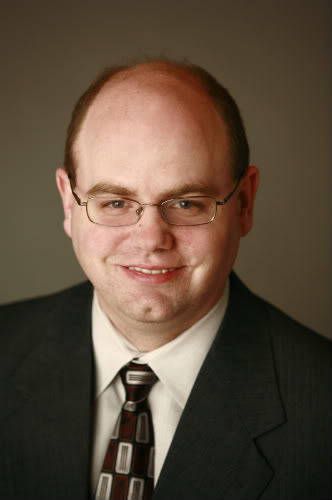
DEfender of New Austrian Economics
Robert P. Murphy was born on March 24, 1976, in the United States. He earned his Bachelor’s degree in Economics from Colgate University and later obtained his PhD in Economics from New York University (NYU) in 2003. Murphy is currently a Senior Fellow at the Mises Institute and also an adjunct professor at Troy University. He is widely recognized for his advocacy of Austrian Economics, with a strong emphasis on free-market principles, sound money, and limited government intervention. He has contributed extensively to libertarian thought and is a frequent author, speaker, and educator.
Murphy’s body of work spans multiple areas of economics, including macroeconomics, monetary theory, and public policy. His most notable works include “The Politically Incorrect Guide to Capitalism”, in which he debunks popular misconceptions about capitalism and government intervention and offers a defense of market economies as the best mechanism for promoting wealth and individual freedom. In “The Human Action of Economics”, Murphy provides a comprehensive introduction to Austrian Economics, discussing its key principles, including methodological individualism and subjective value theory. Murphy’s “Choice: Cooperation, Enterprise, and Human Action” is another cornerstone, which explores human behavior and decision-making from an Austrian perspective, focusing on the importance of entrepreneurship and market coordination. Additionally, in “Understanding Money Mechanics”, he provides an accessible yet detailed explanation of monetary policy, inflation, and the Federal Reserve, advocating for a return to a gold standard and sound money. Murphy is also a prolific blogger and podcaster, regularly addressing issues like economic policy, libertarian theory, and the importance of individual liberty.
Murphy’s work represents a firm commitment to individual freedom, limited government, and a free-market system, while also critically examining the failures of central planning and government intervention in both domestic and international economies. He has also worked closely with the Mises Institute, providing both academic and popular content aimed at promoting the ideas of Austrian economists such as Ludwig von Mises and Friedrich Hayek.
 The Economic Vanguard