Freak of Pop Economics
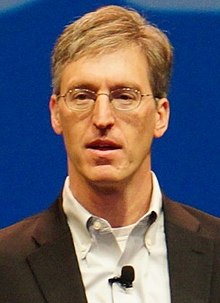
Steven D. Levitt was born on May 29, 1967, in Chicago, Illinois, USA. He is a renowned economist and professor best known for his work in behavioral economics, crime reduction, and the application of economic thinking to a wide range of real-world issues. Levitt earned a B.A. in Economics from Harvard University in 1989, followed by a Ph.D. in Economics from the Massachusetts Institute of Technology (MIT) in 1994. He currently serves as a Professor of Economics at the University of Chicago, where he has gained widespread recognition for his unconventional approach to economic research and his ability to apply economic analysis to everyday problems.
Levitt’s work is most famous for its focus on using economics to examine seemingly unrelated social issues. He has published extensively in leading economics journals, but he is perhaps best known for his co-authorship of the bestselling book “Freakonomics: A Rogue Economist Explores the Hidden Side of Everything” (2005), written alongside journalist Stephen J. Dubner. In this work, Levitt explores a variety of topics through the lens of economic theory, including the effects of parenting on a child’s future success, the role of schoolteachers and sumo wrestlers in cheating scandals, and the surprising influence of abortion on crime rates. Through Freakonomics, Levitt popularized the idea that economics can be used as a tool for understanding social behaviors that appear unrelated at first glance, effectively bridging the gap between academic research and public interest.
Levitt’s work is rooted in the belief that incentives play a crucial role in shaping human behavior. This idea is central to his analysis of crime rates, where he famously argued that the legalization of abortion in the 1970s contributed significantly to the decline in crime during the 1990s. This controversial theory was introduced in the paper “The Impact of Legalized Abortion on Crime” (2001), in which Levitt and his co-author John Donohue proposed that the availability of abortion led to fewer children being born into environments that predispose them to crime, thus reducing the future crime rate.
Levitt’s approach to economics is unconventional in that he emphasizes the importance of examining human behavior and incentives rather than focusing on traditional economic models. He often seeks to challenge widely held assumptions and uses empirical data to uncover hidden patterns and trends. Levitt has applied his economic toolkit to a wide range of topics, including education, crime, sports, and even business incentives, showing how economic principles can provide unique insights into social phenomena.
One of Levitt’s notable contributions to the field of economics is his focus on data analysis and the use of empirical methods to answer practical questions. This methodological approach has made him a key figure in the development of applied economics, where scholars use real-world data to test economic theories and evaluate policies. His work often blends statistics with behavioral insights, revealing how individuals and institutions respond to incentives in complex, real-world environments.
In addition to “Freakonomics”, Levitt has co-authored other influential works, including “SuperFreakonomics: Global Cooling, Patriotic Prostitutes, and Why Suicide Bombers Should Buy Life Insurance” (2009), which builds upon the ideas introduced in the first book by applying economic analysis to a new set of societal issues. Another key work, “Think Like a Freak: The Authors of Freakonomics Offer to Retrain Your Brain” (2014), is a guide to thinking differently about problems, offering insights into how to make better decisions and approach challenges with fresh perspectives.
Levitt’s work has been highly influential, especially in popularizing the use of economic theory to solve real-world problems. He has received numerous accolades for his contributions to the field, including being named a MacArthur Fellow in 2003. However, his work has also attracted criticism, particularly regarding the ethical implications of some of his conclusions, such as the abortion-crime hypothesis, which has been controversial among some scholars and policy-makers.
Levitt is also known for his appearances in the media, including his collaboration with Stephen Dubner on the Freakonomics Radio podcast, which continues to explore the hidden side of everyday life through economic analysis. The podcast has been a significant vehicle for spreading Levitt’s ideas to a broader audience.
Steven Levitt remains an active figure in both academia and the public sphere, continuing his research at the University of Chicago and contributing to the field of behavioral economics and applied economics. His work challenges traditional boundaries of economics and has inspired a new generation of economists and thinkers to look beyond conventional wisdom when analyzing societal issues.
 The Economic Vanguard