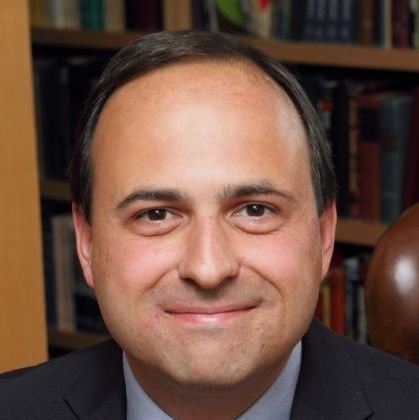
Podcaster of Austrian Economics
Thomas E. Woods Jr. was born on August 1, 1972, in Melrose, Massachusetts, USA. He completed his B.A. in History from Harvard University and went on to earn his Ph.D. in History from Columbia University. Woods is a senior fellow at the Ludwig von Mises Institute, and he has held various teaching positions, notably at Rockhurst University in Kansas City, where he served as a professor of history. He is perhaps best known as a prolific author, podcast host, and public intellectual, widely recognized for his advocacy of Austrian economics, libertarianism, and classical liberalism.
Woods has written numerous books that challenge prevailing economic and political orthodoxies. His “The Politically Incorrect Guide to American History” is one of his most influential works, offering an alternative perspective on U.S. history, critiquing the traditional narrative taught in mainstream educational settings. He argues that much of American history, particularly regarding foreign interventions and domestic policies, has been misrepresented, often in service to political agendas. In “Meltdown: A Free-Market Look at the Economic Crisis”, Woods applies Austrian economic theory to explain the causes of the 2008 financial crisis, critiquing the role of government intervention and advocating for a market-based approach to recovery.
In his well-known podcast, “The Tom Woods Show”, Woods engages with a wide range of topics, from economics to politics and history, often interviewing scholars, economists, and thought leaders. He has been a tireless advocate for liberty, limited government, and sound money and is a staunch critic of central banking and government intervention in the economy. Woods is also a vocal critic of the U.S. Federal Reserve and has frequently discussed the importance of returning to the gold standard as a means of ensuring financial stability.
Through his work, Woods has contributed significantly to the popularization of Austrian economic ideas among broader audiences, particularly through accessible writing and media. His works have helped introduce complex economic principles to readers and listeners outside of academic circles.
 The Economic Vanguard