Efficienado of Neoclassical Economics
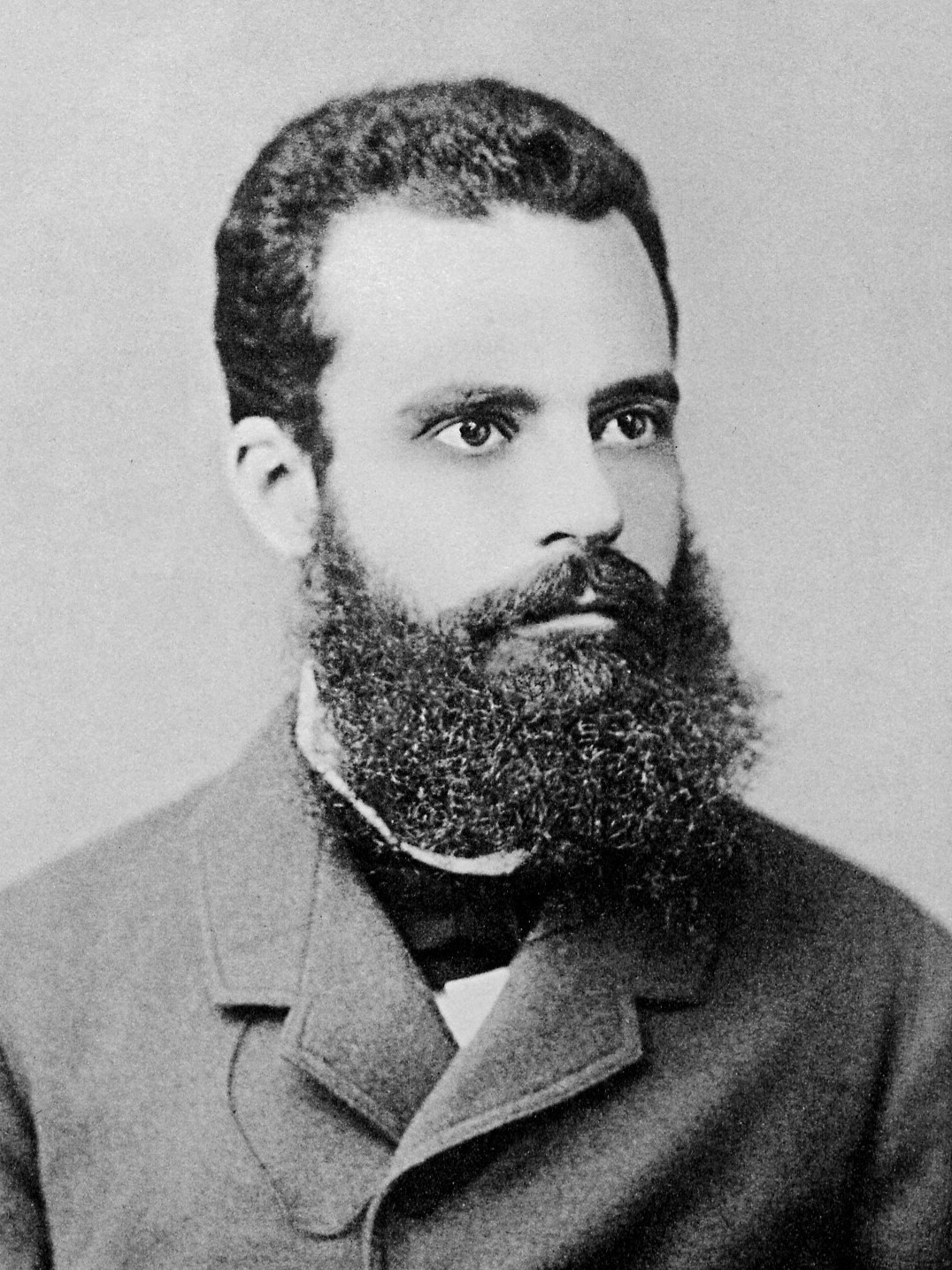
Vilfredo Pareto was born on July 15, 1848, in Paris, France, to an exiled Italian noble family. He studied engineering at the Polytechnic University of Turin, where he developed a strong foundation in mathematics and statistics. Over time, his interests shifted toward economics and sociology, fields in which he made lasting contributions that extended far beyond his lifetime.
Pareto is best known for his work in welfare economics and the development of the Pareto Principle (also known as the 80/20 rule). In his influential book Manual of Political Economy (1906), he introduced the concept of Pareto Efficiency, which describes an economic state where no individual can be made better off without making someone else worse off. This idea became a fundamental criterion in evaluating economic policies and resource allocation.
His Pareto distribution, which describes the unequal distribution of wealth, was derived from his empirical studies of income and land ownership. He observed that in most societies, a small percentage of the population controls a large portion of wealth—an insight that continues to influence modern discussions on income inequality and economic stratification.
Pareto also played a key role in the development of ordinal utility theory, which challenged earlier economists’ reliance on cardinal utility (measurable satisfaction). He argued that utility should instead be ranked in order of preference, laying the groundwork for modern indifference curve analysis and microeconomic theory.
Beyond economics, Pareto made significant contributions to sociology and political theory. In The Mind and Society (1916), he introduced the idea that societies are governed by elites who cycle in and out of power. His theory of elite circulation, which describes how ruling classes are gradually replaced by new elites, influenced later thinkers in political science and sociology.
Pareto’s ideas had a controversial legacy, as some of his theories on elites were later misinterpreted and co-opted by authoritarian movements in the early 20th century. However, his economic insights remain widely respected and continue to shape modern welfare economics, income distribution studies, and policy analysis.
Vilfredo Pareto passed away on August 19, 1923, but his contributions endure across multiple disciplines. His work on efficiency, inequality, and elite theory remains essential to both economic and social analysis.
 The Economic Vanguard